Introduction: Against the backdrop of business expansion in Southeast Asia, exploring multi-location disaster recovery solutions for high-availability platform cloud servers in the Philippines and Cambodia is of practical significance. This article focuses on regional characteristics, disaster recovery design, and actionable strategies to facilitate decision-making and implementation.
ThePhilippines and Cambodia differ in network infrastructure, bandwidth pricing, and submarine cable connectivity, and there are regional differences in data sovereignty and compliance requirements. When designing multi-location disaster recovery, factors such as latency, availability, and legal compliance must be evaluated.
Building a highly available platform should follow principles of availability, resilience, and scalability. Distributed deployment, cross-Availability zone redundancy, and automated operations and maintenance minimize the risk of single points of failure and shorten recovery times.
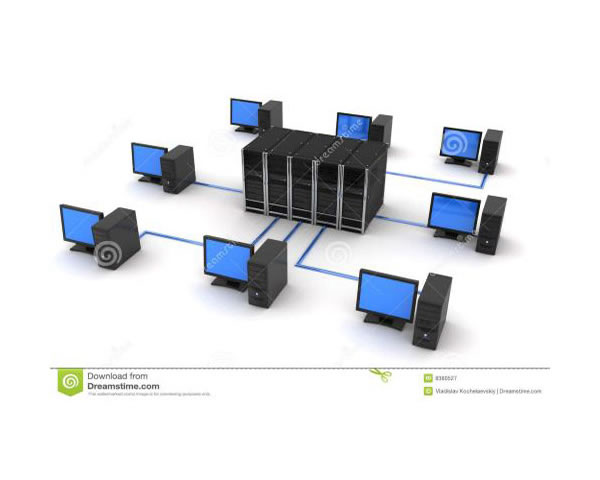
Choose synchronous or asynchronous replication based on business consistency requirements. Key business uses synchronous or semi-synchronous methods to ensure consistency, while cold standby or archiving can use asynchronous replication to reduce bandwidth consumption, and integrity checks are conducted regularly.
Reduce latency fluctuations through multi-carrier access, BGP routing optimization, and CDN edge caching. Network link monitoring and intelligent traffic switching can quickly restore user access experience in the event of a link failure.
Automated detection, alerting, and failover mechanisms are implemented, combined with health checks, heartbeat, and orchestration tools to ensure transparent, rollback-free, and recordable audit logs during failure.
The active-passive model is simple and cost-effective, but recovery time depends on the switching process. Proactive – Proactive offers an almost interruptive experience, suitable for cross-border businesses with extremely high availability requirements, but achieves greater complexity and consistency control.
Cross-border deployments require balancing consistency with latency. It can adopt partitioned design, read-write separation, and local write plus remote synchronization modes, designed to tolerate latency for actual network latency in the Philippines and Cambodia.
Bandwidth quotas and link quality directly affect replication strategies and user experience. Pay attention to local data sovereignty, backup, and log retention requirements to ensure cross-border transfers meet privacy and compliance audit standards.
Uses elastic scaling, on-demand scaling, and tiered storage to reduce long-term costs. Achieve consistency management through automated deployment and infrastructure-as-a-code, with regular fault drills and RPO/RTO evaluations.
Deploying nodes in the Philippines and Cambodia helps shorten response times and improve regional search engine rankings. Combining localized domain names, content languages, and compliant hosting strategies can enhance user trust and SEO performance.
Building a high-availability platform Philippines and Discussion on multi-location disaster recovery solutions for Cambodia cloud servers should focus on business priorities, combining regional network characteristics and compliance requirements to select replication, routing, and failover strategies. It is recommended to proceed in four steps: requirements assessment, architecture validation, drills, and continuous optimization, ensuring the system remains stable, recoverable, and cost-controlled during regional failures.
- Latest articles
- Which Cloud Server In Vietnam Is A Good Case, Sharing Best Practices And Implementation Experiences Across Different Industries
- Gaming Industry Special Edition: Thailand Acceleration Server Rankings And Player Experience Report
- IP Reputation And Blacklist Risk Management When Choosing Hong Kong Multi-IP Server Hosting
- How Cross-border Developers Can Choose A German VPS Hosting Solution That Is Compliant And Supports GDPR
- In-depth Analysis Of The Pros And Cons Of Hong Kong Server CN2 And A Guide For Small And Medium-sized Enterprises To Buy
- Discussion On Multi-location Disaster Recovery Solutions For Building High-availability Platform Cloud Servers In The Philippines And Cambodia
- Analysis Of The Current Status Of Major Server Production In The United States And Recommendations For Future Supply Chain Layout
- In-depth Technical Analysis Of CN2 Routes In Japan Detailed Explanation Of Routing Paths And Node Distribution
- Troubleshooting Guide: Common Network Faults And Solutions For Server VPS In The United States
- Practical Deployment And Maintenance Recommendations For US Site Cluster Servers For Marketing Teams
- Popular tags
-

Real Experience Of Unlimited VPS Services In Cambodia
Deeply explore the real user experience of Cambodia's unlimited VPS services, including performance, stability, security and applicable scenarios. -

Real Experience And Evaluation Of Cambodia Vps Users
This article discusses the real experience and evaluation of Cambodian VPS users to help you understand the advantages and disadvantages of VPS. -

Why Choose Cambodia Vps As Your Web Hosting?
learn why you should choose cambodia vps as your web hosting and explore its advantages, stability and suitability.